
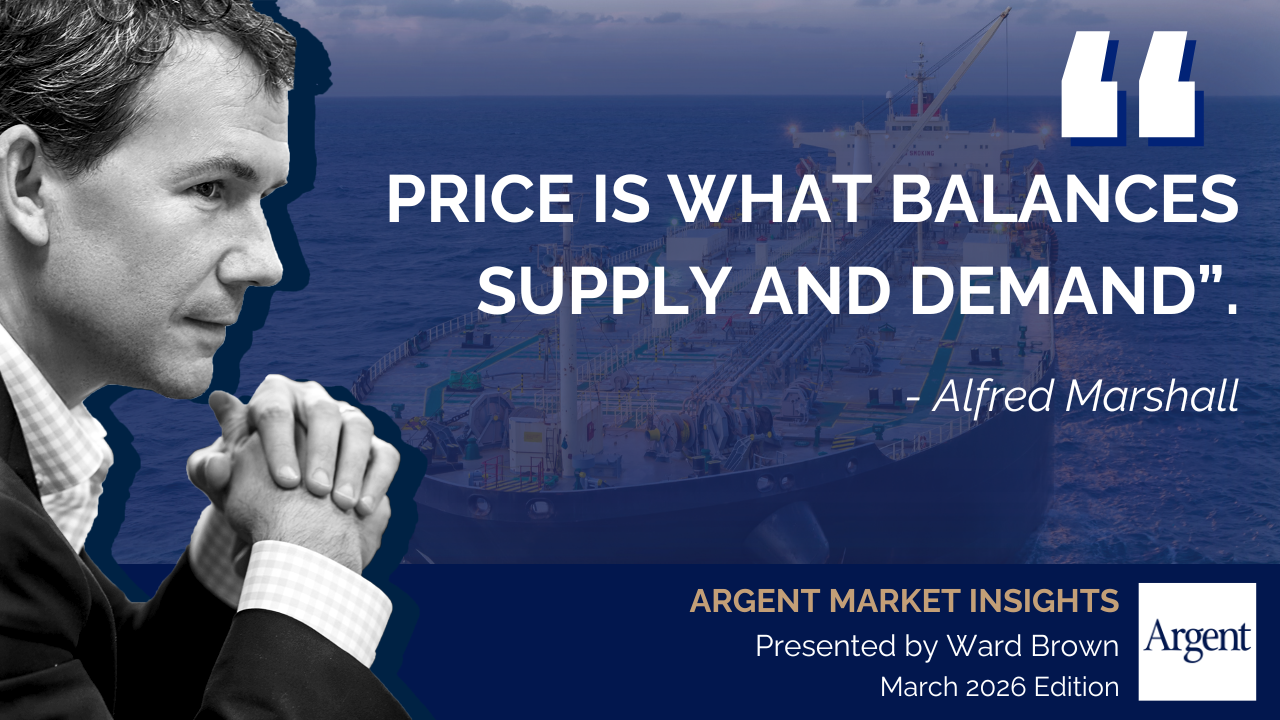
It’s Not Just Oil. Markets Are Watching More.
As geopolitical tensions rise, market attention often centers on headlines, but the more important story lies in how supply disruptions ripple through the global economy.
In this short video, Ward Brown examines how constraints in a critical energy chokepoint are impacting not just oil prices, but also fertilizer, food costs, and key industrial inputs, and what these second-order effects could mean for inflation and markets moving forward.
Transcript
Hi, I’m Ward Brown. The war in Iran is making its way into its third week. But here I am standing outside a local grocery store. How are those two things related? It’s probably more than you think. Let’s take a look.
Over the past two weeks, the conflict involving Iran has injected a fresh dose of geopolitical risk into global markets. And the biggest pressure point is not all the headlines, it’s the bottlenecks. It runs through a narrow waterway called the straight of Hormuz, the main sea exit for the Persian Gulf. In normal times, it handles roughly a quarter of the world’s seaborn oil trade and around a fifth of global liqufied natural gas or LNG. When that kind of choke point gets disrupted, markets don’t just worry about it, they reprice in a hurry. and they have with oil prices getting near $100 a barrel from near $65 a barrel just prior to the conflict.
Now, here’s where most investors stop the story. It’s basically just “oil goes up and inflation goes up.” And that’s a fair assumption, but it’s also incomplete because when people read about inflation risk from higher oil, they think about energy, gasoline, and filling up your car, airlines, and higher price of tickets or shipping. But this conflict has a second derivative that can be even more wide reaching if it isn’t resolved quickly and that’s fertilizer and, ultimately, food prices.
Roughly one-third of global seaborn fertilizer trade moves through that same choke point. And the Gulf region isn’t just a transit route. It’s a major producer of fertilizers like urea and ammonia. When shipping stalls and facilities shut or even slow down, right when farmers are trying to secure supply for the upcoming spring planting season, fertilizer prices can jump up in a hurry. And it’s not just a “nice to have.” It’s a primary input into crop yields. If prices spike or supply gets delayed, farmers may apply less, delay applications, or even switch crops. That doesn’t show up at the grocery store tomorrow, but it will show up later as higher food costs. In other words, an “oil shock” can quietly morph into a “food inflation” problem.
And there are other considerations, especially in today’s tech heavy world. A big one are the semiconductors, helping power everything from our phones to cars and appliances to, of course, artificial intelligence development. The Gulf is also a key supplier of materials and chemicals used across industrial supply chains. For example, sulfur, often a byproduct of oil and gas when it gets refined, is a critical feed stock for sulfuric acid, which is a common chemical used in semiconductor manufacturing. Helium, whereQar is a pivotal producer, is another one, and it has already experienced supply stress during the conflict. Helium is essential in semiconductor manufacturing, and it doesn’t have much for any substitutes. We need it.
So yes, the price of oil matters. Not quite as much as it used to in today’s economy, but it matters. Still, if you want to understand how geopolitical tensions can become broader inflation risk, watch what happens with fertilizer in these “behind-the-scenes” industrial inputs.
When prices start to go up and they stay up, that can create some wider issues. If this deescalates quickly and shipping normalizes, markets can digest it. They do that pretty well. There are some real tailwinds still in effect like strong corporate earnings and stable consumer spending and the still decent employment environment. But if this drags on, uncertainty doesn’t just stay in energy. It spreads. It’ll spread into groceries and technology and the Federal Reserve decision on how much it can lower interest rates if prices keep going up. That’s a different set of variables and the stock market will be following it very closely. Thanks very much for watching.
Disclaimer: Performance returns cited represent past performance, which does not guarantee future results. Returns assume reinvestment of dividend and interest but returns do not reflect the effect of taxes and/or fees that an investment would incur. References to specific company securities should not be construed as investment advice. Not all Argent clients may own each company’s stock discussed. Argent portfolio managers may recommend the purchase or sale of these and other securities for their client’s accounts. A list of all stocks recommended by Argent during the past year is available upon request. Some data represented in this article is derived from non-affiliated sources Argent deems reliable. However, Argent does not perform any independent research to determine the accuracy of such information. Please visit our compliance page for additional details and disclaimers.
